Jan Fabre. There is no escape from art
Sofia, SAMCA
22.03.2019 - 28.04.2019
This is the first solo exhibition of Belgian artist Jan Fabre in Bulgaria. He is one of the most important visual and theatre artists of his generation. Jan Fabre was the first living artist to receive a large-scale solo exhibition at one of the world’s most important museums: the Louvre. The exhibition ‘There is no escape from art’ at the Sofia Arsenal – Museum for Contemporary Art presents a unique ensemble of performance / film, drawings, photography, and sculptures in which the search for an understanding of the identity of the artist, and the identity of art, are questioned. The self-portrait and the ‘disappearance in many appearances’ of the artist are its starting point. For the first time creations linked to Fabre’s historical exhibition and performance at the Louvre in particular are brought together.
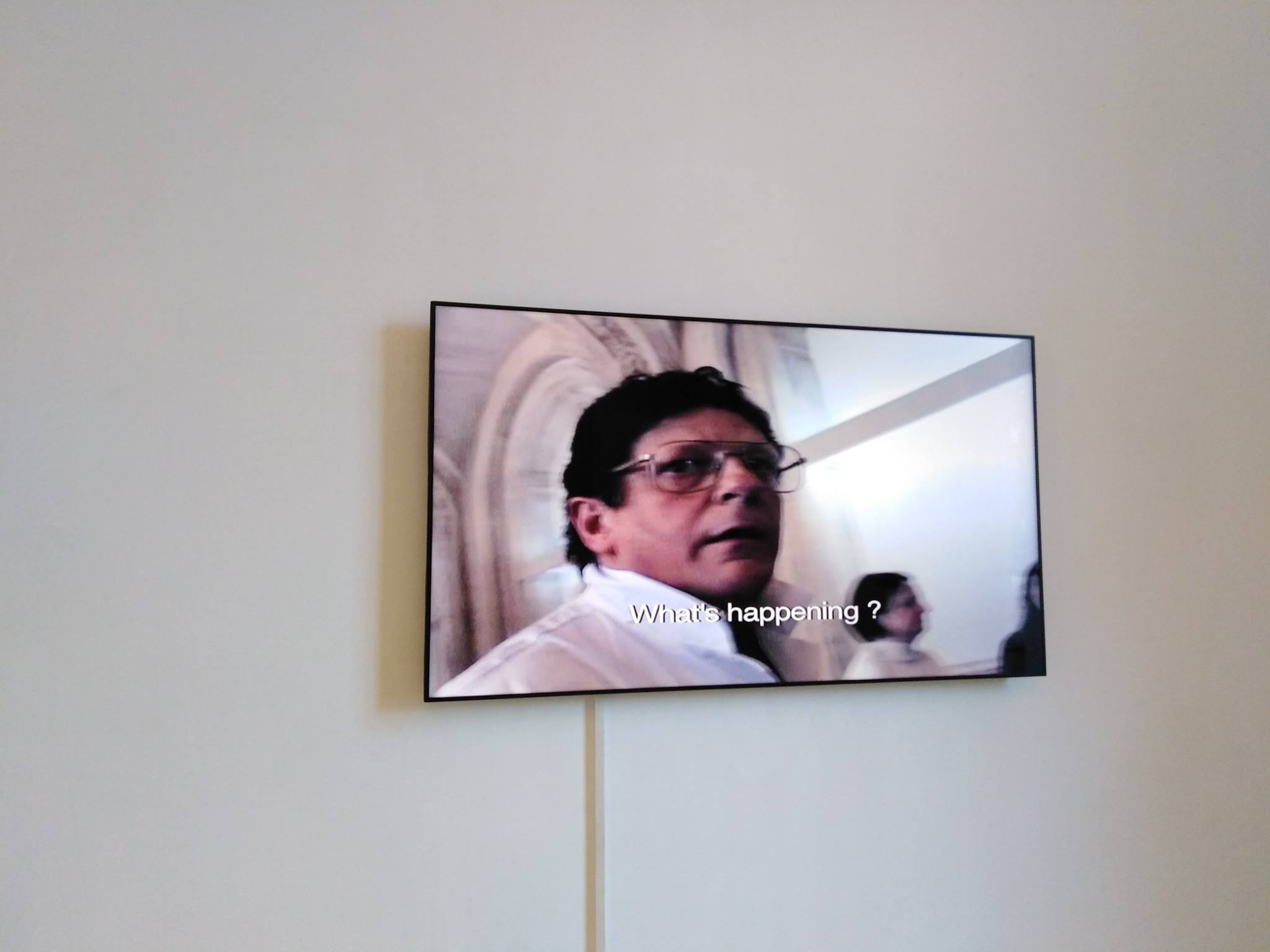
At SAMCA, the performance/film ‘Art kept me out of jail (Homage to Jacques Mesrine)’ is shown as a self-portrait, not of Fabre as an individual, but of the artist in his desire to escape a singular identity. Jan Fabre is a consilience artist and a man of a thousand faces. His performance / film originates in the early eighties, when the artist performed several unannounced street actions as a tribute to Jacques Mesrine, a French gangster who was, for a long time, considered public enemy n°1 in France. The title ‘Art kept me out of Jail’ is the title of a performance by Jan Fabre in New York in the early 1980s. A new interpretation was given to ‘Art kept me out Jail (Homage to Jacques Mesrine)’ in 2008 in the length of 70 meters of the Galerie Daru at the Louvre, during his exhibition ‘L’Ange de la Métamorphose’. He made a new performance: a four hour long cat-and-mouse game with the press and the audience in the so-called “largest, most expensive and best guarded prison in France: the Louvre.” The funny and playful aspects of the performance / film are seen at SAMCA: every now and then we see famous curators and critics, towards whom the artist takes up an ironic attitude during his performance.
↓
Why this tribute to Jacques Mesrine? Jan Fabre says: “In my life there were always two choices: to become a good artist or to become a good gangster.” For Jan Fabre, Jacques Mesrine is the symbol of a passionate personality, someone who tries to survive by means of disguises and succeeds in escaping regulations and institutions. It is never about romanticizing the gangster’s aggression or violence, but about the lust for life, the energy and vitality – his conviction to change society, and his faith in the anarchy of love.
November 22nd, 1979: police officers open fire on Jacques Mesrine near the Porte Clignancourt in Paris, and kill him. Mesrine had led a life of criminal activity for decades. His escape from the maximum-security prison La Santé is one of his most famous feats. He was referred to as ‘the man of a thousand faces’: thanks to his many disguises, he managed to successfully hide despite all the media attention surrounding him.
Metamporphosis is an essential theme throughout the exhibition. The change of mask and costume for every new venture. The disguise as an element of continuous change of identity. Jan Fabre will continue shedding his skins, appearing and disappearing there is no escape from art, until exhausted, he escapes in death at the feet of the Nike of Samothrace, pierced by the same number of bullets as Jacques Mesrine was near the Porte de Clignancourt in Paris.
The feeling of escaping has always been important to Jan Fabre. He has always felt as an ‘escape artist’. “It is impossible to ‘frame’ me, to define me by a single category, as a theatre artist, or as a visual artist, or in the literary world. I am a one-man movement,” Jan Fabre says.
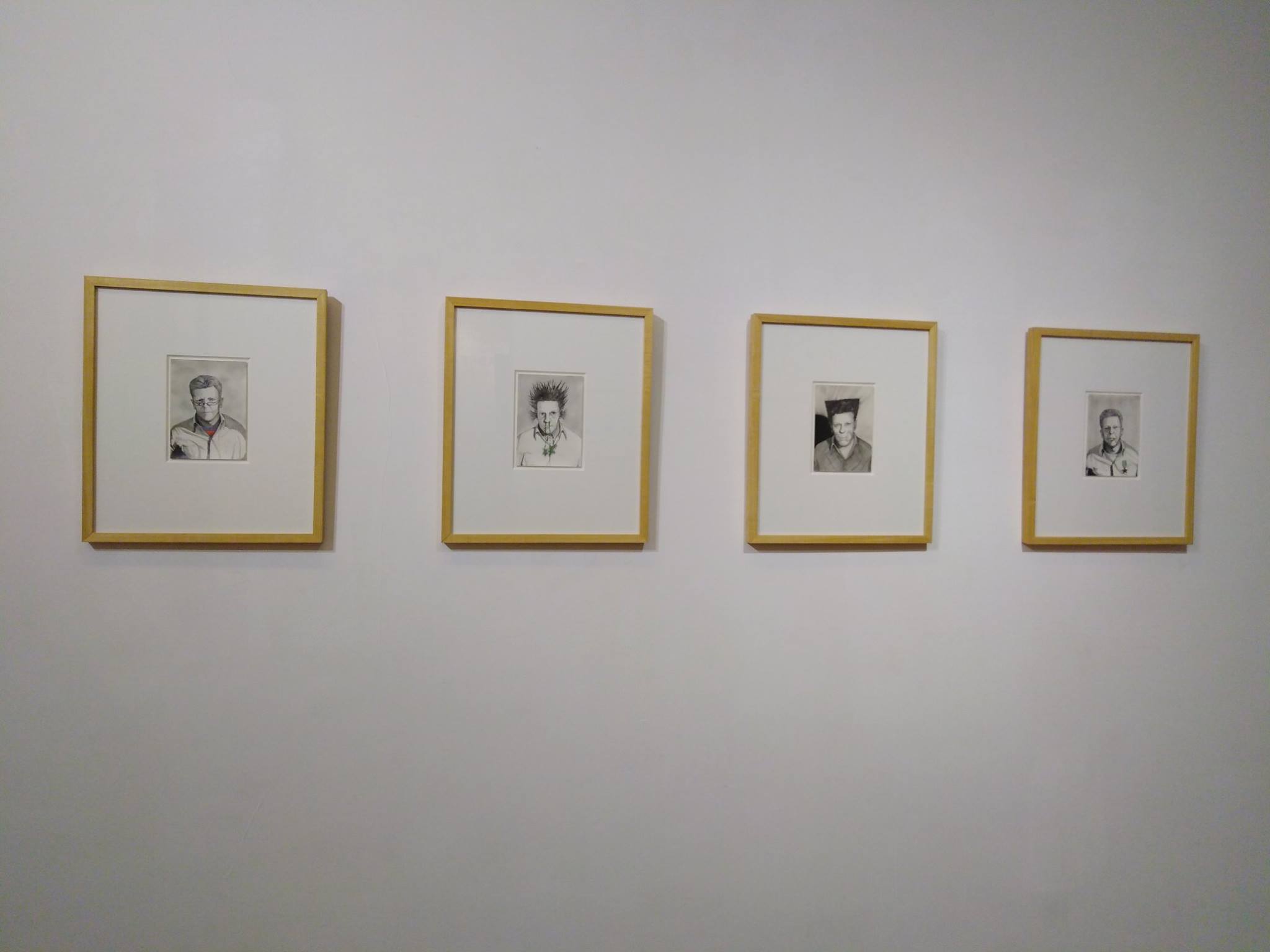
The series of drawings in ‘The Escape of the Artist’ is a pattern-card of identities, suggestions for disappearance. Might some be inspired by Mesrine’s disguises? Every self-portrait shows Jan Fabre wearing a remarkable necklace, most often including a religious symbol.
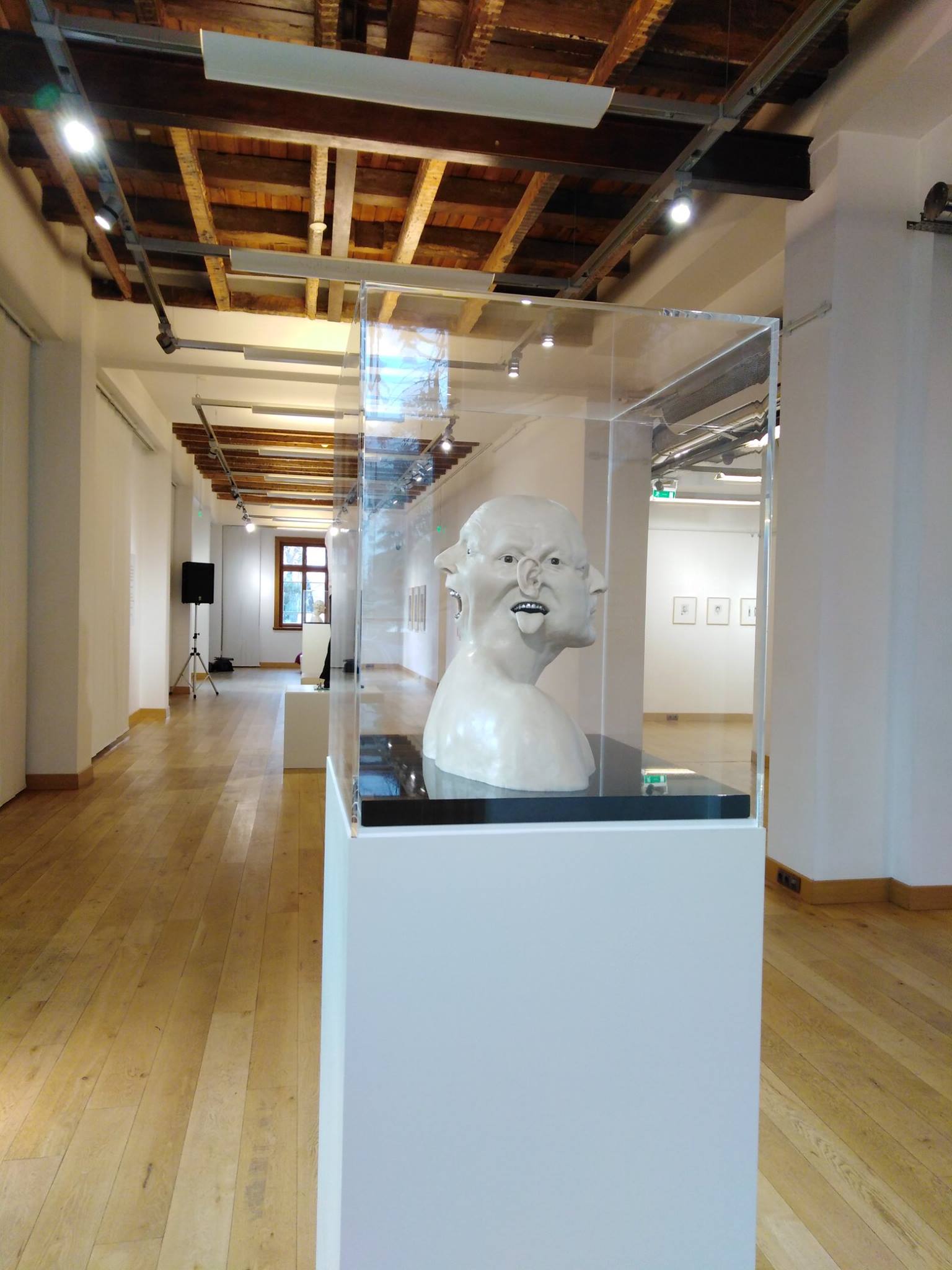
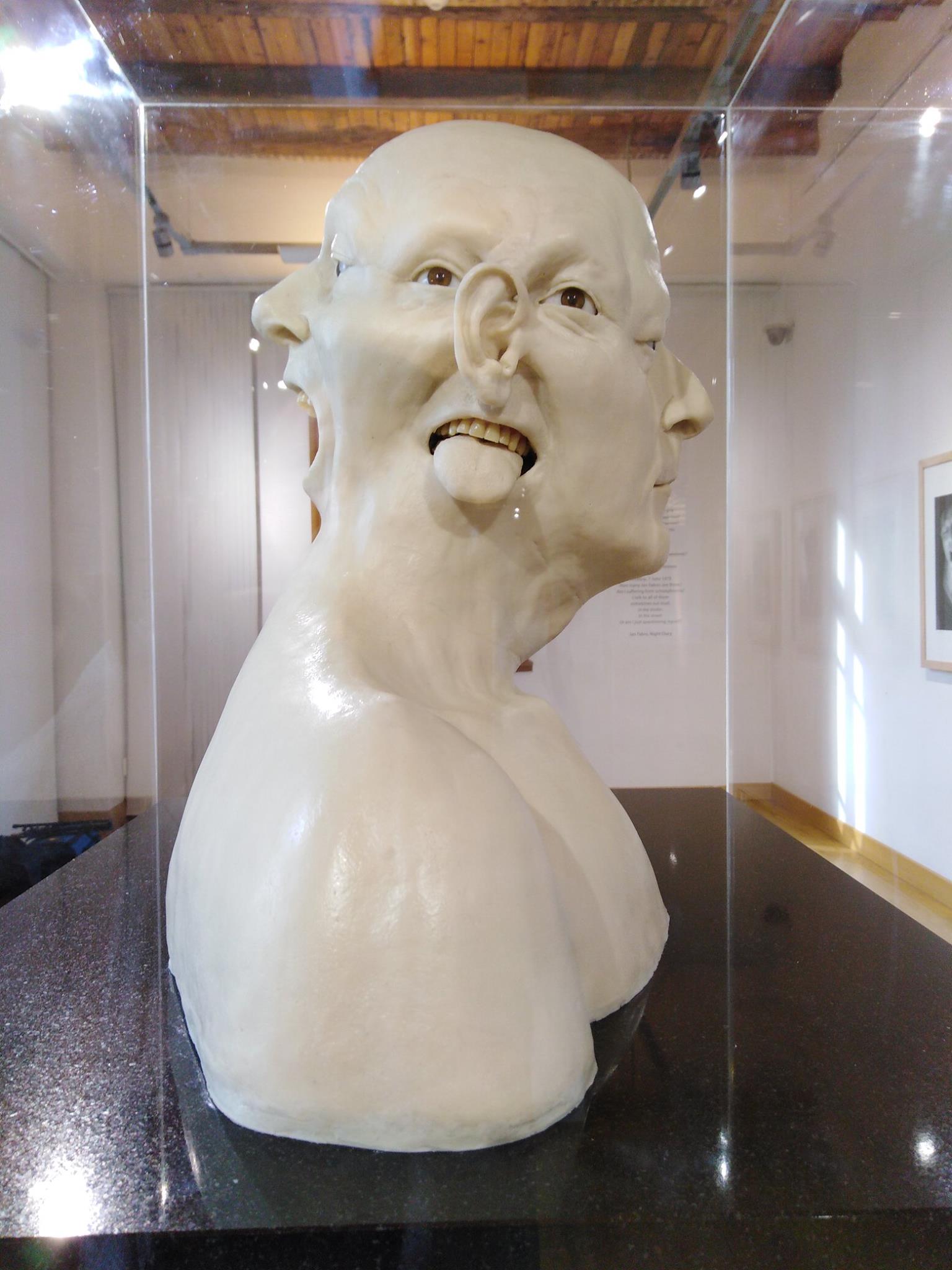
Two four-sided Janus sculptures, also self-portraits of Fabre, are equally entitled ‘Homage to Jacques Mesrine’. The Roman god Janus – god of gates and transition, of change and time – plays an important part in Jan Fabre’s oeuvre. These two wax sculptures show the rigour of the ethical and aesthetical bite of the artist in the history of art.
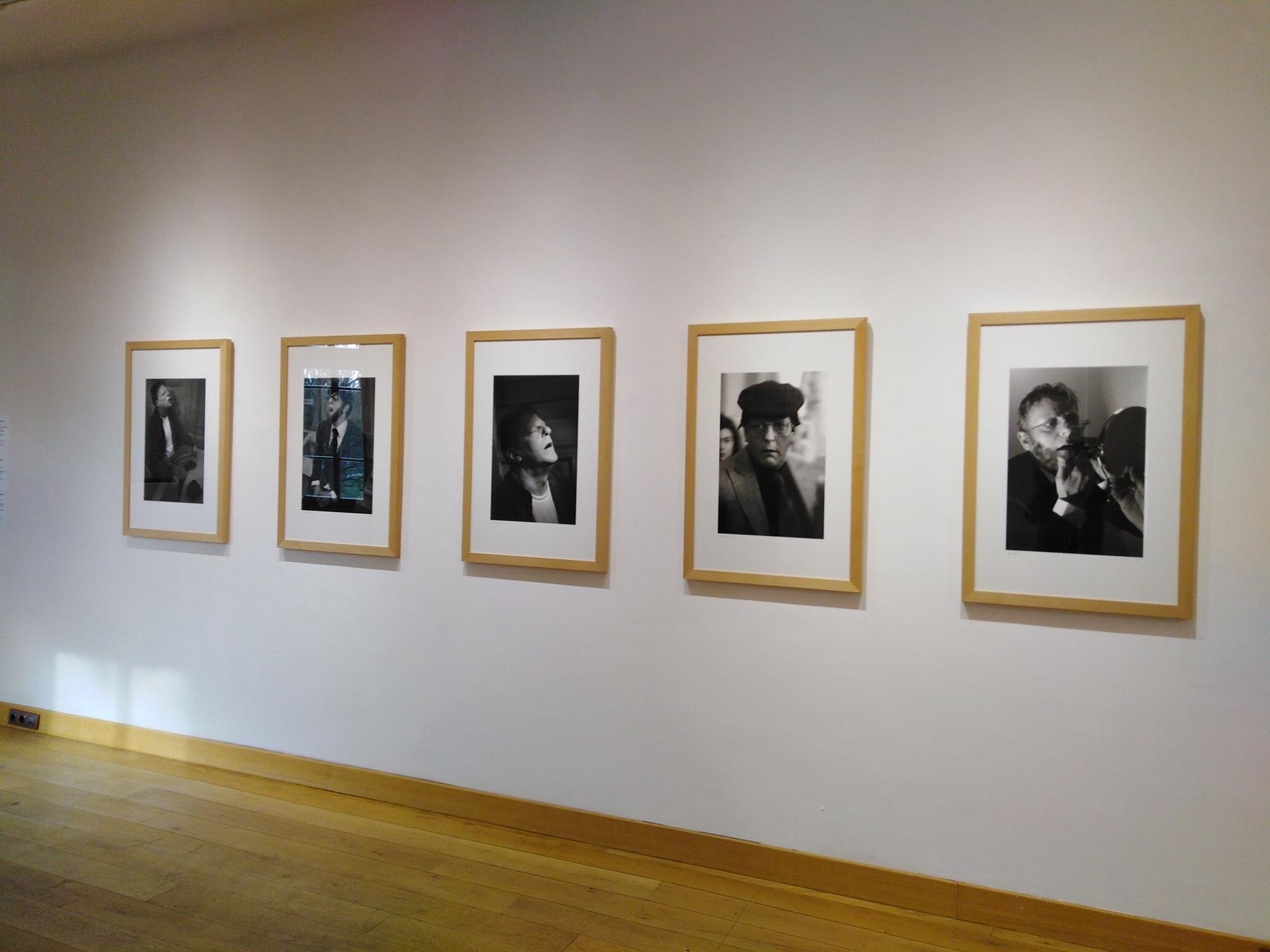
Are the eight black and white photographs showing an escape artist in ecstasy? Are they revealing an artistic desire to disappear in the appearance? The photos often show him with an open mouth: sweating in ecstasy? And screaming: the body, in any of its appearances, merely a spokesman for art. “You can take everything away, but not my ideas, not my intentions!” Do the photographs represent the thought that each material appearance is inferior to the spiritual soul it carries?
installation views